 By:
By:  Contents
Discover Best Practices for AI SEO Content Writing
Artificial intelligence has changed search — but not in the way many people think.
Instead of replacing traditional SEO, AI-driven discovery has expanded it.
Today, your content needs to perform across three overlapping layers: search engines, answer engines, and real human readers.
As a content writer or SEO marketer, your strategy can’t rely on keywords alone.
Today’s effective content prioritizes clarity, structure, credibility, and usefulness; these are the signals that instruct both Google and AI systems to surface content, all while readers connect deeper.
In this guide, we’ll break down a practical, modern SEO checklist built for 2026, one that ensures your content ranks, gets cited, and actually converts. Read on to learn each essential step.

SEO, AEO, and Human Experience: The Pillars of Good Content
The most effective content today is written for people and structured for machines.
As SEO experts, we approach every piece of content with three goals in mind:
- SEO (Search Engine Optimization): Rank on traditional search engines.
- AEO (Answer Engine Optimization): Get surfaced in AI-generated responses.
- Human Experience: Keep readers engaged, informed, and moving forward.
When these three align, content performs exponentially better — ranking higher, earning more visibility in AI summaries, and driving measurable business outcomes.
The checklist below shows exactly how to write content that ranks for all three. Let’s dive in.
SEO Content Strategy & Structure Checklist
Strong SEO performance starts long before the writing begins, rooted in how you plan and structure your content.
A clear strategy ensures your content aligns with search intent, answers real user questions, and is organized in a way that both readers and search engines can easily navigate.
This section outlines the foundational elements that make content discoverable, scannable, and effective across search and AI-driven platforms.
Answer the question immediately
Effective content starts with clarity; users search for a term to find an answer.
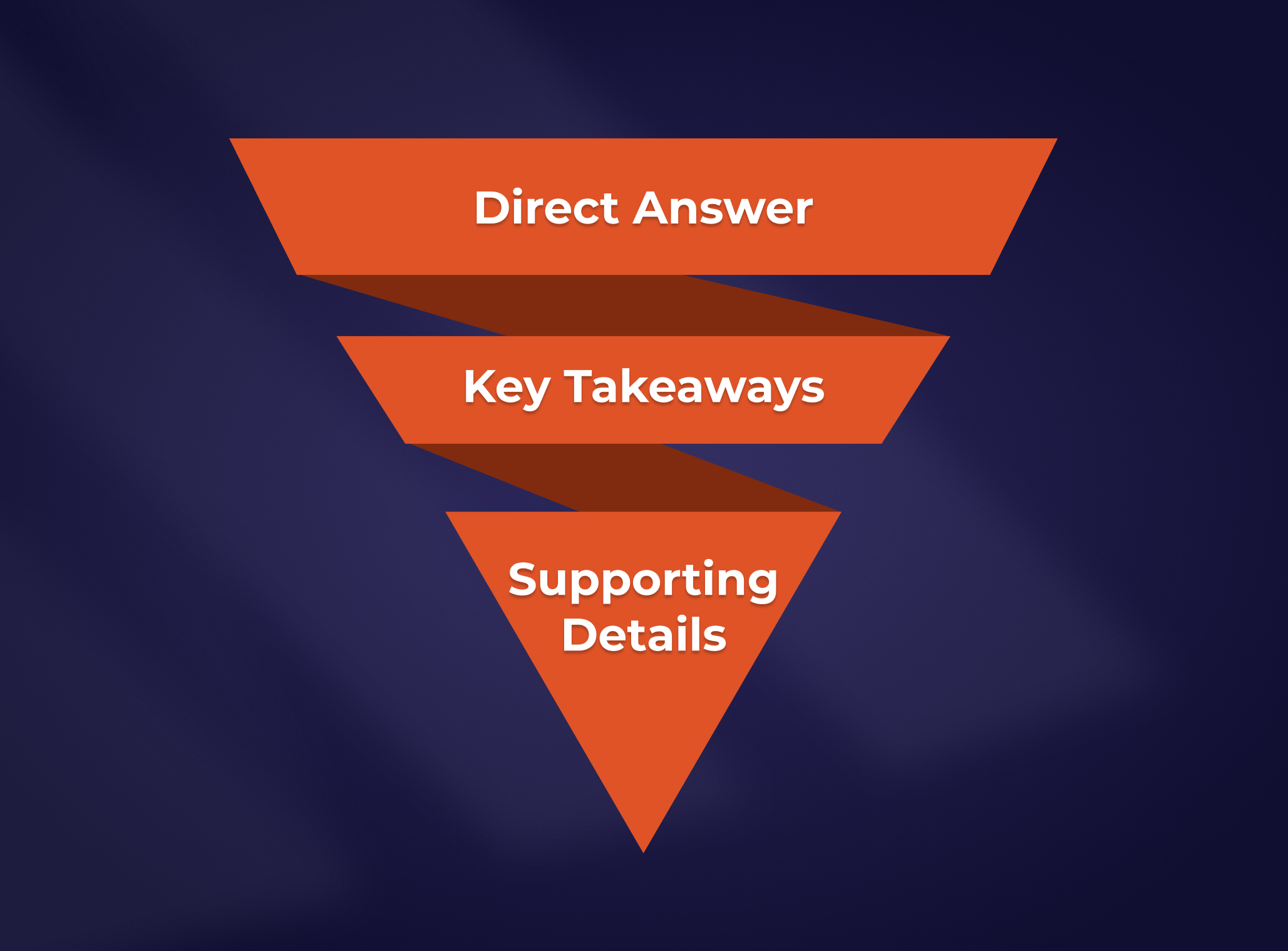
High-ranking pages use an inverted pyramid structure, meaning the most important information appears first.
At the top of your page, content should include:
- A direct answer to the primary query.
- Key takeaways or summary points from the rest of your content.
- Clear context for what the reader will learn, and what type of reader will find value from your content.
Using this inverted period model will improve content experience for users, increase eligibility of your content for featured snippets, and bolster AI extraction potential.
Match search intent and user goals
Ranking starts with alignment.
If your content doesn’t match the keywords users are actually looking for, it won’t perform — no matter how optimized it is.
When creating content for SEO, AEO, or AI, you should focus content strategy on targeting terms within one of the four following search intents:
- Informational intent: Terms where users are looking to learn (e.g. “What is…”, “How to…”).
- Commercial intent: Terms where users are looking for types of products (e.g. “Best tools…”, “Top providers…”).
- Transactional intent: Terms where users are ready to buy (e.g. “Buy…”, “Get started…”).
- Navigational intent: Terms where users are searching for a specific brand or website (e.g. “Captivate Search Marketing”).
Your titles should also focus on long-tail keywords to mirror real queries, with sections that directly answer them.
Structure content clearly
For humans and robots alike, well-structured content is easier to read.
Optimized AI SEO content follows clear content structure, using these formatting best practices:
- One clear H1 title.
- Logical H2 and H3 subheadings.
- Bullet points and numbered lists within content.
- Short paragraphs (2-4 lines max).
- Informational tables where helpful.
With these rules, each section of your content becomes easy to scan and quick to understand, helping users find the specific part of your content useful to them.
Prioritize helpful, authoritative content
Search engines increasingly reward depth and credibility over surface-level content.
Types of content that drive deeper, more complex content include:
- Step-by-step guides (ex. “The Step-By-Step Guide to SEO Content Strategy”).
- FAQs (ex. “How Can I Write Effective SEO Content?”).
- Case studies (ex. “Captivate SEO Improved Domain Authority by 50% Using SEO Content Strategy”).
- Data-driven blog posts (ex. “15 Statistics That Show the Power of SEO Content”).
Prioritizing E-E-A-T is another key method to establishing content authority. E-E-A-T content showcases each of the following portions of the acronym within content:
- Experience: Show that experts in the content’s subject matter write your content, with ample real-world capability
- Expertise: Demonstrate that your content writer has skills and knowledge relevant to your content’s subject matter.
- Authoritativeness: Help brand authority by earning links from other websites and producing consistent, quality work.
- Trustworthiness: Outline who is behind the content you’re producing, maintaining customer trust and a positive reputation.
E-E-A-T content within these effective formats provide the backbone of successful search rankings.
Optimize technical elements
Even great content can underperform without proper technical optimization.
When building out your content structure, make sure you include:
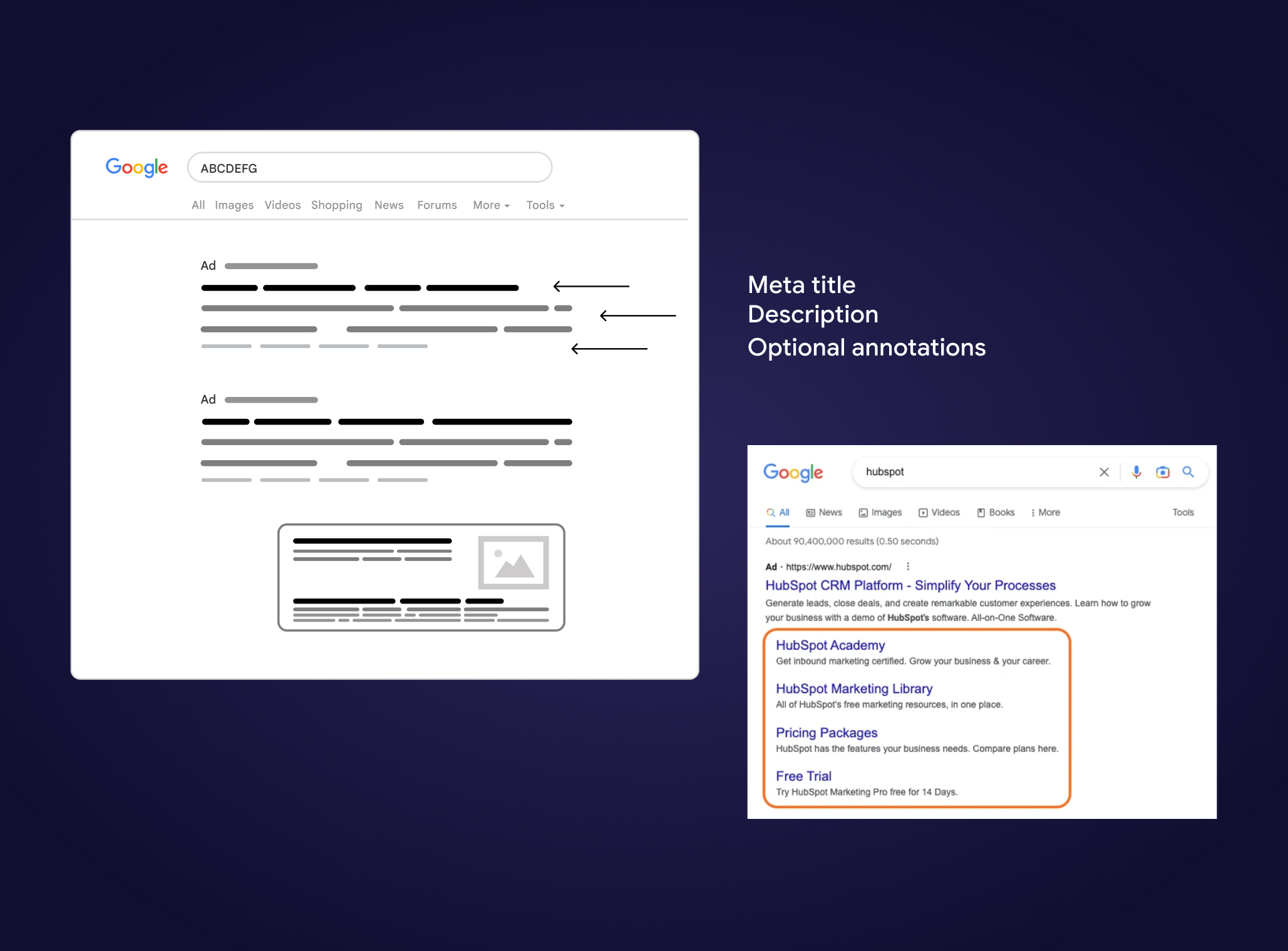
- Intent-focused meta titles and descriptions
- FAQ schema for rich results
- Descriptive image alt text
- A properly implemented llms.txt file to guide AI systems
These elements help humans, search engines, and AI platforms understand your content — in turn prioritizing it for all three.
SEO Content Writing Checklist
Even the best strategy can fall flat without strong execution.
SEO content writing today requires a balance of clarity, credibility, and human-first messaging that resonates with readers while still meeting technical requirements.
In this section, we’ll break down how to write content that is concise and authoritative, helping you build trust, improve rankings, and increase the likelihood of helpful AI citations.
Include real data and examples
With users growing skeptical of AI-generated copy, unauthoritative content blends in.
Stand out with content supported by thorough data.
To strengthen your copy, consider adding any number of the following when appropriate:
- Statistics and research findings (ex. “83% of U.S. adults use streaming services”).
- Survey results (ex. “69% of survey respondents preferred streaming to cable”).
- Industry benchmarks (ex. “89% of households have streaming services”).
- Proprietary insights (ex. “our experts found that 75% of users have a Smart TV”).
Tying in authoritative sources when appropriate improves the credibility of your content to users, search engines, and artificial intelligence alike.
Write clearly and concisely
Clarity wins. Always.
Okay, perhaps you don’t have to be that concise.
Still, brevity is a major key to readability for your SEO content. Key tips to writing more concise SEO content include:
- Use of active voice, making the subject of your sentence the on performing an action.
- Keeping sentences short and direct, avoiding run-on sentences.
- Removing unnecessary filler words such as “actually,” “literally,” and “basically”
If a sentence doesn’t add value, cut it. If a word doesn’t add value, cut it. If a paragraph doesn’t have value? You get it.
Maintain a natural, conversational tone
Content should feel human, not robotic or overly formal.
Even a blog titled “Content 2026 SEO Checklist” could use a hint of levity.
For effective content, write like you speak. Make sure your tone:
- Uses simple, everyday language
- Avoids jargon unless necessary
- Keeps the tone approachable and confident
Using these tips will improve reader engagement and reduce bounce rates, thus improving overall rankings within search engines and authority for AI.
Stay positive and helpful
Even when addressing challenges, your content’s tone should guide readers toward solutions.
Instead of focusing on problems, have your content:
- Highlight benefits of the solutions and solves you’re explaining.
- Offer actionable recommendations that directly address potential reader issues.
- Provide clarity and direction on what problems are, and readers can do about them.
Helpful content builds trust; this trust drives conversions for users and rankings for search engines.
Guide the reader to the next step
Every piece of content should have a purpose.
Think back to those longer tail queries; even a simple question like “How Can I Write Effective SEO Content?” will have several different angles to tackle.
When writing and structuring your content, make sure that you:
- Align content with user intent, only including sections & copy relevant to the initial query.
- Include clear calls to action (CTAs), directing users to other portions of your website when helpful.
- Help users navigate by using instructive language (e.g. learn more, contact, download, etc.).
Using these strategies, great content moves a reader across both your content and your entire website.
SEO (Search Engine Optimization) Checklist
Traditional SEO is still a critical driver of visibility, but the way we optimize content has evolved.
Moving beyond keywords alone, today’s optimization is about creating well-structured, technically sound pages that align with user intent and deliver real value.
This section covers the essential on-page SEO elements that help your content rank higher, earn clicks, and perform consistently in search engine results.
Write optimized meta titles and descriptions
Metadata is your first impression in search results, often determining whether users click or scroll past.
Strong titles and descriptions should clearly communicate value while aligning with search intent. Think of metadata as concise ad copy for your page — focused and compelling.
Best practices for optimizing meta titles and description include:
- Including primary keywords naturally (ex. “Atlanta SEO Company | Award-Winning SEO Services”).
- Clearly communicating page value and intent (ex. “Atlanta SEO Company | Award-Winning SEO Services”).
- Keeping titles ~50–80 characters and descriptions ~120–160
- Using action-oriented language (ex. “Our Award-Winning Atlanta SEO company developed our Search First® approach to connect people with the answers they need. Get a Free SEO Consultation.”).
- Aligning messaging with user expectations (ex. “Our Award-Winning Atlanta SEO company developed our Search First® approach to connect people with the answers they need. Get a Free SEO Consultation.”).
With strong metadata, your content will see improved click-through rates and reinforced relevance across both search engines and AI-driven results.
Use optimized images
Images enhance both SEO and user experience when optimized correctly. Large, unoptimized files, however, only serve to slow performance and hurt rankings.
To leverage images that break up content and improve engagement with your content make sure to:
- Use descriptive, keyword-relevant file names (ex. “business-man-hotel-room”).
- Add clear, concise alt text (ex. “business man reads book in hotel room”).
- Incorporate keywords naturally (ex. “business-man-hotel-room”)
- Compress images for faster load times
- Use visuals to support on-page content
When done right, optimized images become a powerful asset that boosts visibility and overall page performance.
AEO (Answer Engine Optimization) Checklist
As AI-powered search experiences continue to grow, optimizing for answer engines has become integral to overall content performance. AEO focuses on structuring and presenting content in a way that AI systems can easily extract and cite.
In this section, we’ll cover how to position your content for maximum visibility in AI-generated responses, helping you stay competitive in the next evolution of search.
Implement FAQ schema
FAQ schema helps search engines and AI systems extract and display your content more effectively. Using JSON-LD, you can structure questions and answers for better visibility in rich results and AI summaries.
FAQ schema best practices include:
- Using JSON-LD to structure Q&A content
- Targeting high-intent, commonly searched questions
- Providing clear, concise answers
- Aligning FAQs with search intent
- Improving eligibility for rich results
By implementing FAQ schema, you make your content easier to surface, understand, and prioritize across modern search experiences.
Use llms.txt to guide AI systems
An llms.txt file helps control how AI systems access, summarize, and cite your content. As AI-driven discovery grows, this file is becoming a key part of modern SEO strategy.
An effective llms.txt file can:
- Clarify content usage permissions
- Guide summarization and interpretation
- Encourage proper attribution
- Align AI outputs with your brand
- Support visibility in AI search
Ultimately, llms.txt gives you more control over how your content is represented and credited in AI-powered environments.
Structure content for AI extraction
AI systems rely on structure to interpret and reuse content. Even strong content can be overlooked if it isn’t formatted clearly and logically.
To improve AI extractability:
- Use clear H2 and H3 headings
- Break down content with bullet points
- Include direct answers and summaries
- Add definitions where helpful
- Maintain a logical content flow
Well-structured content increases your chances of being accurately extracted and surfaced across both search engines and AI platforms.
Captivate’s AI SEO Content Checklist Recap
If you want your content to rank, get cited by AI, and convert real users, every piece needs to check these boxes:
SEO Content Strategy & Structure Checklist
- Answer the question immediately
- Match search intent and user goals
- Structure content clearly
- Prioritize helpful, authoritative content
- Optimize technical elements
SEO Content Writing Checklist
- Include real data and examples
- Write clearly and concisely
- Maintain a natural, conversational tone
- Stay positive and helpful
- Guide the reader to the next step
SEO (Search Engine Optimization) Checklist
- Write optimized meta titles and descriptions
- Use optimized images
AEO (Answer Engine Optimization) Checklist
- Implement FAQ schema
- Use llms.txt to guide AI systems
- Structure content for AI extraction
Let Our SEO-Experts Optimize Your Content for Humans & Bots Alike
SEO in 2026 is all about aligning content to perform for search engines, AI platforms, and users.
Brands that win are ones creating content that answer questions immediately, demonstrate real expertise, and leverage structure for both humans and machines to understand.
By following this checklist, you’re building content that earns visibility in AI-generated responses, drives meaningful engagement, and converts users at every stage of the journey.
From strategy and structure to technical optimization and AI readiness, every element plays a role in how your content performs.
At Captivate Search Marketing, we help brands navigate this evolving landscape with content strategies designed to rank, resonate, and scale.
If you’re ready to create SEO content that performs across search and AI alike, our team is here to help you lead the way. Book your free consultation with our team today.